

Benedict Arnold: The Lost General
April 2026
“No public or private injury or insult shall prevail on me to forsake the cause of my injured and oppressed country until I see peace and liberty restored or nobly die in the attempt.”
“I daily discover so much baseness and ingratitude among mankind that I almost blush at being of the same species, and could quit the stage without regret, was it not for some gentle, generous souls like my dear Peggy Benedict.”
Benedict Arnold
“It is universally known that he has always distinguished himself as a judicious, brave officer, of great activity, enterprise, and perseverance.”
George Washington
“Millions of Americans cannot tell you who lived at Mount Vernon or who wrote the Declaration of Independence - let alone the Emancipation Proclamation. But they know that to be a Benedict Arnold is to be a traitor of the deepest dye - someone who coldly betrays not only a sacred cause but every moral scruple along the way.”
Arthur L. Herman
Judas. Heard on many a Sunday and given co-lead status in an Andrew Lloyd Webber musical, this one-time disciple is a stand-in for treachery and betrayal. Yet, as a boy, it wasn’t the 1st-century figure but an American who represented duplicity and perfidy. To be called a “Benedict Arnold” represented a particularly harsh condemnation. And Arnold, who has many achievements, came up as I was reading the 2nd volume of Rick Atkinson’s trilogy on the Revolutionary War.
I have a funny relationship with Atkinson’s works. I think he is probably, except any historian who has appeared on one of my shows, of course! the best American historian of our time. He is, without question, the most thorough among those working on American military exploits. So why is it funny? Because he is the guy whose success means he is no longer edited. I love much of the detail inherent in his work, including the logistics, but boy, there is little on the cutting room floor. His level of detail on British and American logistics is long and exhaustive, but is it necessary to mention every single shipment of wheat?
Yet in his The British are Coming and Fate of the Day, Atkinson’s 1st and 2nd volumes on the Revolutionary War, he thoroughly catalogs the many successes of Benedict Arnold. He is right to note that a combination of both a myopic Congress and his own fragile ego led to one of the most egregious examples of treachery in American history. Atkinson calls Arnold a “obvious, completely mesmerizing figure.”
My knowledge of Arnold had been tangential. I knew he was part of the failed Canadian conquest early in the war, and believed that he, and not Horatio Gates, was the crucial figure at Saratoga. Though Atkinson does a creditable job of reviving Gates’ reputation, he does not diminish the critical role of Arnold in what was arguably the most important battle of the war, since Lexington and before Yorktown. Of all the figures in the Revolutionary War, Arnold seems most to combine an aggressive style with a clear-sighted view of what is, and what is not, possible. Washington was certainly aggressive, as shown by victories such as Trenton and defeats at Germantown. But often Washington seems to have missed things that should have been obvious.
And the British generals, with not only superior numbers in most battles, but far superior training, should have sought out Washington for a decisive, destructive battle. Yet they seemed far more concerned with preserving their army than with destroying his. That works in a defensive war, but the British were attempting to reconquer the colonies, not just keep New York City. Arnold’s actions and demeanor leave the impression that he would have done better, at least in the battles, than the commanders-in-chief on either side.
If, in defending New York, he had seen the logistical issues earlier or the trap at Kips Bay. And if Arnold were on the British side, he would have pushed harder across the Island and trapped Washington’s forces. If at Germantown, he would have reduced the complexity of the operation commensurate with the troops’ training. And if Howe or Clinton had sought that decisive battle, not fritter away troops in all places ranging from St. Lucia to South Carolina to Canada.
We cannot know these what-ifs for certain, but we have a strong track record of Arnold’s battles. And we will never know because after his return from his severe wounds at Saratoga, he would never lead another American army, and do much worse.
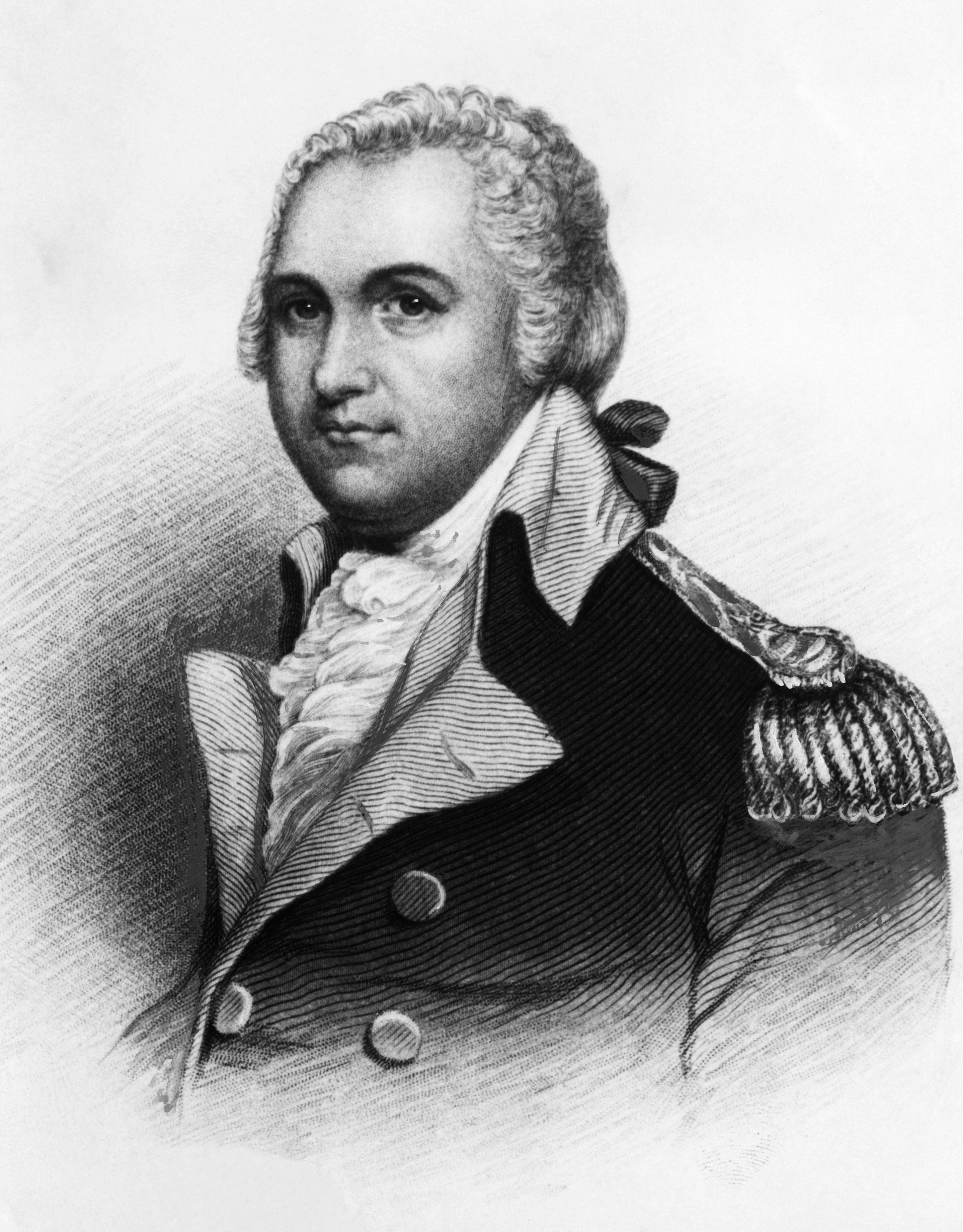
Benedict Arnold remains one of the most controversial and paradoxical figures in American history—a man whose name became synonymous with treason, yet whose early contributions were crucial to the success of the American Revolution. His life illustrates the complex interplay of ambition, honor, resentment, and political conflict in a time of upheaval.
Born in 1741 in Norwich, Arnold grew up in a once-prominent family that had fallen into decline due to financial mismanagement and personal tragedy. Determined to restore his family’s standing, he became a successful merchant before the outbreak of the American Revolutionary War. When tensions between the American colonies and Great Britain escalated, Arnold quickly aligned himself with the Patriot cause, driven by both ideological commitment and personal ambition.
Arnold’s early military career was marked by boldness and effectiveness. He participated in the capture of Fort Ticonderoga in 1775 alongside Ethan Allen, securing valuable artillery for the Continental Army. In the skirmish, Arnold, with his usual Elan, “charges up the stairs to the officers’ quarters,” according to an eyewitness account. Yet even in his victory, Arnold’s mind is on the credit. In a memorandum Arnold noted, “Mr. Allen finding he had a Strong Party & being Impatient of Controul & taking umbrage at my Forbiding the People to Plunder, He Assumed the Intire Command, & I was not Consulted or Advised With, for 4 Days which Time I spent in the Garrison As a private Person, often Insulted by him & his Officers, Often Threatned with my Life & twice Shot at by his Men with their Fusees.” The war is barely weeks old, and Arnold already has a chip on his shoulder.
Later that year, Arnold undertook a grueling expedition through the wilderness of Maine to capture Quebec City. Although the assault ultimately failed, Arnold demonstrated remarkable endurance and leadership, earning him recognition as one of the Continental Army’s most daring officers. Part of it was Washington’s insistence on divided forces with one prong aimed at Montreal, which was less of a strategic target than Quebec. Other issues include everything from delayed back pay to inaccurate maps to traitorous guides.
Yet, as Willard Sterne Randall, a professor emeritus of history at Champlain College and author of the 1990 biography Benedict Arnold: Patriot and Traitor, even with these delays, Arnold may have succeeded. “If Arnold had gotten to Quebec three days earlier, it might have worked. He almost pulled it off.” And despite being outnumbered, an assault on New Year’s Day might have succeeded, but Arnold was wounded in the assault, and his co-Commander, Brig. Gen. Richard Montgomery was killed in his own attempt on the Quebec walls. Writer Patrick J Kiger notes, “A single volley of cannon fire killed Montgomery, and most of his officers, and Arnold was severely wounded in the leg by a rifle shot and had to be dragged off the field.” And yet, “to Arnold’s credit, he didn’t give up.
Along with the tattered remainder of his forces, he cleverly kept up the siege, moving a single cannon around and firing at the fort to create the illusion that he had more artillery.” Yet, as with Ticonderoga, Arnold’s efforts were disregarded, and he was ordered home: “Arnold was superseded and pushed aside,” Randall says. It was the start of a pattern in which his field experience and bravery were disregarded, and he was repeatedly passed over in favor of other officers. “This was the beginning of his dilemma about which side to be on.” After Arnold left, the British were reinforced, and the Americans retreated across the border.
One of Arnold’s most remarkable feats was creating and leading a naval delaying action against the British. James Nelson’s Benedict Arnold’s Navy documents these actions. In 1776, thinking to link up with the British army that was then landing in New York City, an army from Canada descended into New York State. They also intended to secure Lake Champlain along the way. “The British, however, did not realize that Arnold had foreseen just such a move and had begun building a ragtag fleet to meet the greatest navy in the world. Arnold knew that he could not defeat such a powerful armada, but if he could inflict enough damage and slow the British down, they would have to wait until the following spring to put their plan into action. Arnold was buying valuable time for George Washington’s army, which was in the process of being routed in New York.” Though technically Arnold lost the Battle of Valcour Island, he inflicted enough damage to delay the British forces and force them back to Canada as winter was approaching. As Baron Riedesel, commanding the Hessians in Carleton’s army, noted, “If we could have begun our expedition four weeks earlier, I am satisfied that everything could have ended this year.
Perhaps Arnold’s most significant contribution came during the Battle of Saratoga. Serving under Horatio Gates, Arnold played a decisive role in defeating British General John Burgoyne, who was leading an army through New York, down the Hudson River with the ultimate objective of New York City.
On October 7, a fearless Arnold led the most consequential assault of his short but illustrious career when he charged and captured a strongly defended enemy redoubt at the Battle of Bemis Heights, ensuring an American victory. “It is late in the day, but let me have men, and we will have some fun with them before sunset.” Arnold told Gates of his desire to attack. Perhaps more importantly, Arnold’s battlefield heroics forced Burgoyne to abandon his drive to Albany finally. Within a week, General John Burgoyne would surrender his entire army, and, with this victory, France would enter the war.
Although Arnold was instrumental in winning both battles of Saratoga, Gates, the American commander, failed to mention Arnold’s exploits in his official dispatches to Congress. Gates, who would prove to be unscrupulous and even try to undermine Washington’s authority, was jealous of Arnold’s fame and had no intention of adding to it. Not surprisingly, Arnold reacted in a fury and had an ugly confrontation with Gates. Even before his heroism, Arnold’s relationship with Gates had deteriorated, and he felt his contributions were not sufficiently recognized. And yet our accounts come from a character named James Wilkson, of whom the later president and historian, Theodore Roosevelt, would say, “In all our history, there has been no more despicable character.” So we are reliant on the facts of the battle, and we know of Arnold’s role, his severe wounding, and his later gripes and accusations.
This sense of grievance was a defining aspect of Arnold’s character, as we have seen, from the beginning. Yet was he so different? British commanders William Howe and, later, especially Henry Clinton, complained of being ill-served by the British government. Nathanael Greene’s failure at Fort Washington was dismissed. Charles Lee thought he was ill-used. The incompetent John Sullivan kept receiving commands. Even the often stoical Washington could give in to grumbling, and we do not even have his letters to his wife. In a war in which one side was perpetually under-resourced, and the other was fighting 3,000 miles from their base of supplies and manpower, it was logical that complaints would be paramount. And this is added to the general competitiveness that pervades martial endeavors. Yet only one of these figures not only switched sides, but did so with the intention of betraying a key fortress.
What probably did Arnold in was his severe wound at Saratoga. Passed over for promotion by the Continental Congress and accused of corruption by a group of Pennsylvanians, Arnold grew increasingly embittered. Arnold was not without reason for his grievances, but here you have a man of action and temperament who needed to be occupied, spending his time on administrative functions, still in pain, and finding a very young and pretty wife to accommodate.
Financial difficulties compounded his frustrations, as he had not only spent much of his own fortune supporting the war effort by purchasing an estate for his new wife, but also had to sell his own estate to finance the purchase. His marriage to Peggy Shippen, who came from a Loyalist family, further influenced his perspective and connections.
“It would be the twentieth century before the opening of the British Headquarters Papers at the University of Michigan proved what the eighteenth century refused to believe: that a young and beautiful woman was capable of helping Benedict Arnold plot the greatest conspiracy of the American Revolution and then completely fooling the astute warriors around her,” states Randall.
It was this witches’ brew of grievance, idleness, pain, and love for his new bride that provided ingredients for treachery. And the British observing from their own vantage point were puzzled by Arnold not getting another worthy command.
“Even in the Loyalist press inside British-occupied New York City, by February 1779. The Royal Gazette, praising Benedict Arnold for being “more distinguished for valor and perseverance” than any other American, including Washington, wondered why the enemy was wasting his “military talents” and had permitted him “thus to fall into the unmerciful fangs of the executive council of Pennsylvania, adds Randall.
Arnold’s appointment as commander of West Point proved to be the fulcrum of his career. Entrusted with the strategic fort along the Hudson River, Arnold secretly negotiated with the British, offering to surrender the fort in exchange for money and a commission in the British Army. His contact, John André, was captured in 1780 carrying incriminating documents, exposing the plot. Arnold managed to escape to British lines, but André was captured and executed, becoming a martyr in the American narrative.
Arnold’s defection shocked and outraged the American public. Once celebrated as a hero, he became a symbol of betrayal. He was commissioned as a brigadier general in the British Army and led raids against American forces, including attacks in Virginia and Connecticut. However, he never fully gained the trust or respect of his British counterparts. And it was a logical assumption, he had, after all, switched sides once. Why not again like an American Alcibiades?
After the war, Arnold lived in England and later in Canada, but he never achieved the prominence or respect he once enjoyed. He died in relative obscurity in London in 1801, his legacy permanently tarnished.
The story of Benedict Arnold is ultimately one of contradictions. He was undeniably brave and talented, contributing significantly to the American cause in its darkest hours.
Yet his ambition, wounded pride, and financial distress led him to commit one of the most infamous acts of treason in American history. It was not his grievance but his myopia. Had he stayed loyal and never seen action after 1779, Arnold would still be remembered to this day as a patriot who not only sacrificed for his nation, but whose actions in Canada, on Lake Champlain, and especially at the turning-point battle, Saratoga, would be remembered and celebrated. It was not to be.
Instead, his life serves as a cautionary tale about the fragility of reputation and the powerful role that personal grievances can play in shaping historical outcomes. In American memory, Arnold’s name endures less for his battlefield achievements than for his betrayal. However, a full understanding of his life reveals a more nuanced figure. It was not that he was a traitor; rather, he had greatness about him, squandered.


